

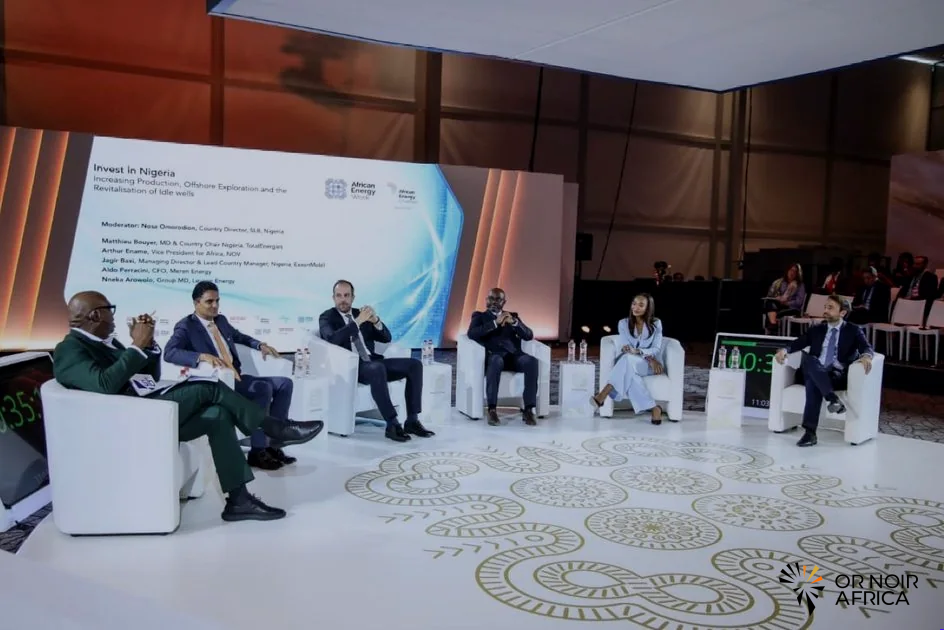
TotalEnergies plans to mobilise a deepwater drilling rig in Nigeria before the end of October 2026, according to discussions at African Energy Week. The announced mobilisation period, estimated at around nine months, represents an improvement over preparation periods previously lasting several years. This reflects a determination to revive offshore exploration as Nigeria seeks to reverse production decline and strengthen its position among Africa's leading producers.
The announcement comes as investment decisions involve several considerations. Authorities want to increase volumes, attract capital to offshore blocks and strengthen energy security. Companies assess fiscal terms, operational security, commercial potential and infrastructure availability before committing spending potentially extending over decades.
A shorter schedule, but obstacles remain
Rig mobilisation is a tangible activity indicator. Shortening the interval between decision and start-up limits waiting costs and improves equipment utilisation. This progress nevertheless does not guarantee geological success: exploration remains risky and may yield no commercial discovery. Performance must therefore be measured by operations completed, result quality and the ability to advance promising prospects.
TotalEnergies also called for restoring deepwater investment incentives, arguing that the current fiscal regime does not always reflect these operations' complexity and costs. The debate concerns balancing public revenues with project attractiveness. Targeted incentives can encourage drilling, but must be transparent, temporary and linked to verifiable outcomes to preserve long-term national revenues.
Operational security in the Niger Delta remains a major challenge. Pipeline disruptions, crude theft and facility risks complicate production and can affect insurance and operating costs. Deepwater projects are not immune to these logistical and commercial risks: transport, port services and production evacuation depend on a reliable operating environment.
Gas enters the revival strategy
Beyond oil, Nigeria seeks greater gas availability for industry and LNG exports. September's final investment decision on the Ima gas project targets announced production of 350 million cubic feet per day from 2028. This project could support LNG-chain supplies, subject to facility construction and necessary contracts.
ExxonMobil is simultaneously pursuing an injection and development programme at the Usan field, with an announced target of around 40,000 barrels per day as part of the work. These projects illustrate the coexistence of exploration, maintaining existing production and gas development. Nigeria's challenge is to synchronise investments with processing and evacuation capacity so infrastructure delays do not reduce new spending's effect.
Sector discussions presented Nigeria as accounting for around 38% of African upstream investment decisions in 2025, compared with nearly 4% in 2021. Renewed interest reflects reforms, new projects and the country's resource scale. It does not mean production recovery is secured: results will depend on production start-up rates, security and fiscal stability.
Closing the gap between ambition and production
Nigeria's government targets production of up to 3 million barrels per day. Approaching it requires exploration campaigns alongside asset rehabilitation, action against losses, improved equipment access and contractual dispute resolution. Production objectives gain credibility when projects have published schedules, mobilised financing and clearly established operational capacity.
Local suppliers can also benefit from renewed activity if local content requirements come with real contract access, skills transfer and financing capabilities. The challenge extends beyond production volumes: technical services, maintenance, logistics and training can prolong domestic economic benefits.
The next step is therefore to turn the mobilisation announcement into actual drilling and any discoveries into development decisions. A successful campaign could strengthen investor confidence and support Nigeria's hydrocarbon portfolio. Lasting revival will nevertheless also depend on how the country improves energy security, diversifies revenues and manages production-related environmental risks.
Have any thoughts?
Share your reaction or leave a quick response — we’d love to hear what you think!
-
 0
-
0
-
0
-
0
-
0
-
0





