

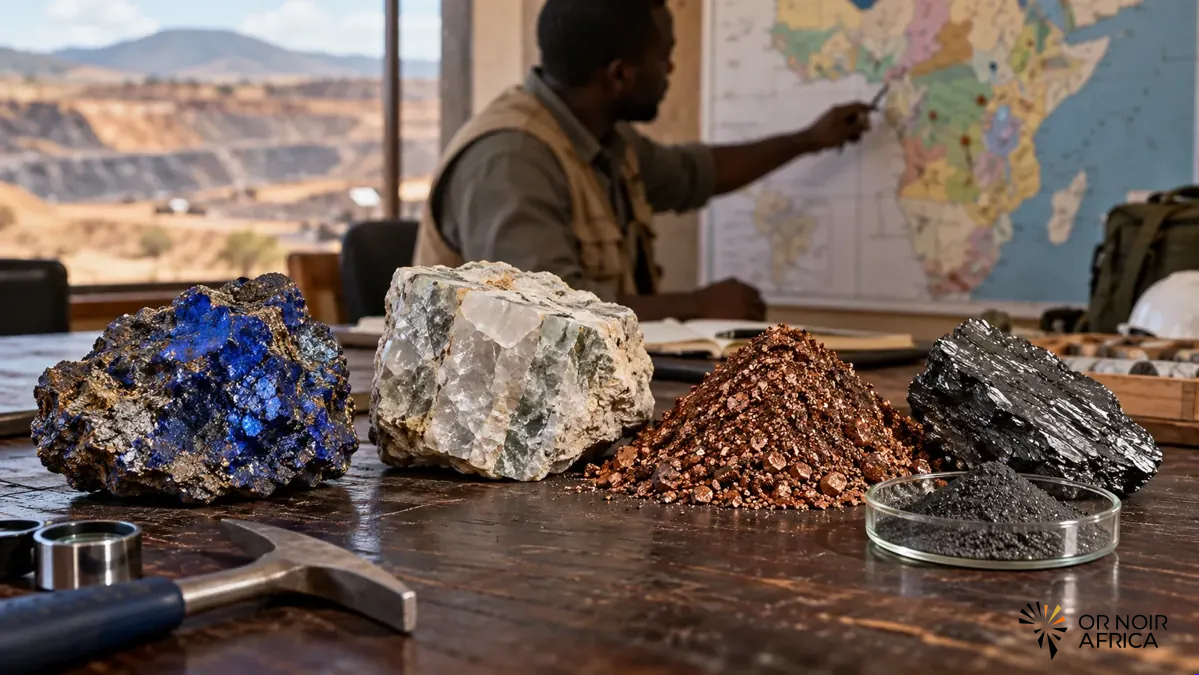
**Categories:** News, Mining **Tags:** Zimbabwe, platinum, Darwendale, Mutapa Platinum, mining finance **Excerpt:** Mutapa Platinum Group says it has secured $100 million to advance Darwendale, a platinum-group metals project valued at $500 million. Raising these funds does not yet guarantee complete financing or commercial production. **Slug:** zimbabwe-financement-100-millions-projet-platine-darwendale **Image alt:** Platinum mining site under development in a Zimbabwean landscape.
The Darwendale platinum project in Zimbabwe is receiving fresh financing. Mutapa Platinum Group says it has obtained $100 million to support development of an asset with an estimated total cost of around $500 million. The announcement signals renewed activity on a large project, but the next step is to turn this allocation into works, equipment and operational capacity.
Darwendale is presented as a substantial platinum-group metals deposit. These metals — particularly platinum, palladium and rhodium — are used in automotive catalysts, chemical products and several technologies. Their value varies with industrial demand, mobility policies, major mining countries' output and available inventories. For Zimbabwe, which seeks a greater mining contribution to its economy, the project could strengthen strategic metals production and export earnings.
Funds to reach the next stage
The announced $100 million represents a significant initial tranche relative to the estimated $500 million total cost. The company said preparatory works had begun. This funding can support initial activities, site preparation, additional studies, access infrastructure and equipment mobilisation. The precise schedule will depend on the complete financing structure and contracts for the various phases.
It is essential to distinguish financing obtained from fully secured financing. A mining project of this size often needs several capital sources: equity, debt, buyer advances, industrial partnerships or equipment-related financing. Each involves different conditions, deadlines and risks. Investors must assess regulatory stability, electricity availability, water and transport infrastructure access and the company's ability to control construction costs.
Moving from an announced project to a producing mine involves several stages. Processing infrastructure must be built and tested; feed circuits, metal recovery and tailings management must meet technical and environmental criteria. Initial operating results then verify whether volumes and costs match design assumptions.
Mining potential is not enough
A substantial deposit is a necessary condition but does not alone determine profitability. Grades, mineralogy, depth, recovery rates and concentrate composition directly influence revenues. Energy and logistics costs can also weigh on margins, particularly for exported products.
The Darwendale area will need reliable electricity. A mine and processing plant consume substantial energy, and interruptions can slow operations or increase costs. Water access, mine waste management and skilled workers' availability are other performance factors. To benefit the local economy, supply contracts and training programmes must include Zimbabwean companies and skills.
The project also operates within a cyclical global market. Platinum-group metals are exposed to changes in combustion-engine and hybrid vehicles as well as new industrial uses. Price changes between the investment decision and production start can alter project economics. Controlling schedules and costs therefore becomes as important as resource estimates.
An opportunity for revenues and local content
If Darwendale meets its production objective, it could increase mineral exports and support public revenues. However, benefits depend on fiscal arrangements, local processing levels, domestic procurement and jobs created. Temporary construction jobs must not be confused with permanent operating positions, generally fewer in number but more skilled.
Transparency about permits, contracts, tax payments and environmental obligations can strengthen community and financial partner confidence. Mining projects often face high local expectations concerning infrastructure, compensation, employment and water protection. Dialogue and monitoring mechanisms would help prevent tensions and address concerns before they delay construction.
Production schedules and announced annual volumes remain to be clarified as work advances. Regular publication of expenditure incurred, contracts awarded and work results would provide a concrete measure of progress.
The $100 million financing therefore advances Darwendale without yet resolving the industrial equation. The challenge is now to complete financial resources, keep work on schedule and demonstrate that necessary infrastructure can support competitive operations. For Zimbabwe, success will be measured by actual production, lasting revenues and the share of value created within the country.
Have any thoughts?
Share your reaction or leave a quick response — we’d love to hear what you think!
-
 0
-
0
-
0
-
0
-
0
-
0





