

The United States and Nigeria have announced a cooperation framework intended to deepen US investment in Nigeria’s mining sector. Presented on the sidelines of the United Nations General Assembly in September, the arrangement covers exploration, geological data, deposit development, processing, infrastructure and technical capabilities. It forms part of closer ties between Washington and Abuja and the global competition to secure critical minerals.
Nigeria’s solid minerals minister, Dele Alake, estimated the country’s mineral resources at around $700 billion. This figure is a broad estimate of geological potential, rather than the value of proven reserves, producing mines or already-financed projects. Converting this potential into industrial activity will require exploration campaigns, studies, infrastructure and commercial agreements that remain to be established.
A cooperation framework still to become projects
The announced text structures bilateral cooperation, but is not yet a list of approved mines or a firm financial commitment to specific assets. Nigerian authorities say they want to identify viable projects and build partnerships creating value for both countries. The next stage will therefore be specifying participating companies, target minerals, financing arrangements and project selection rules.
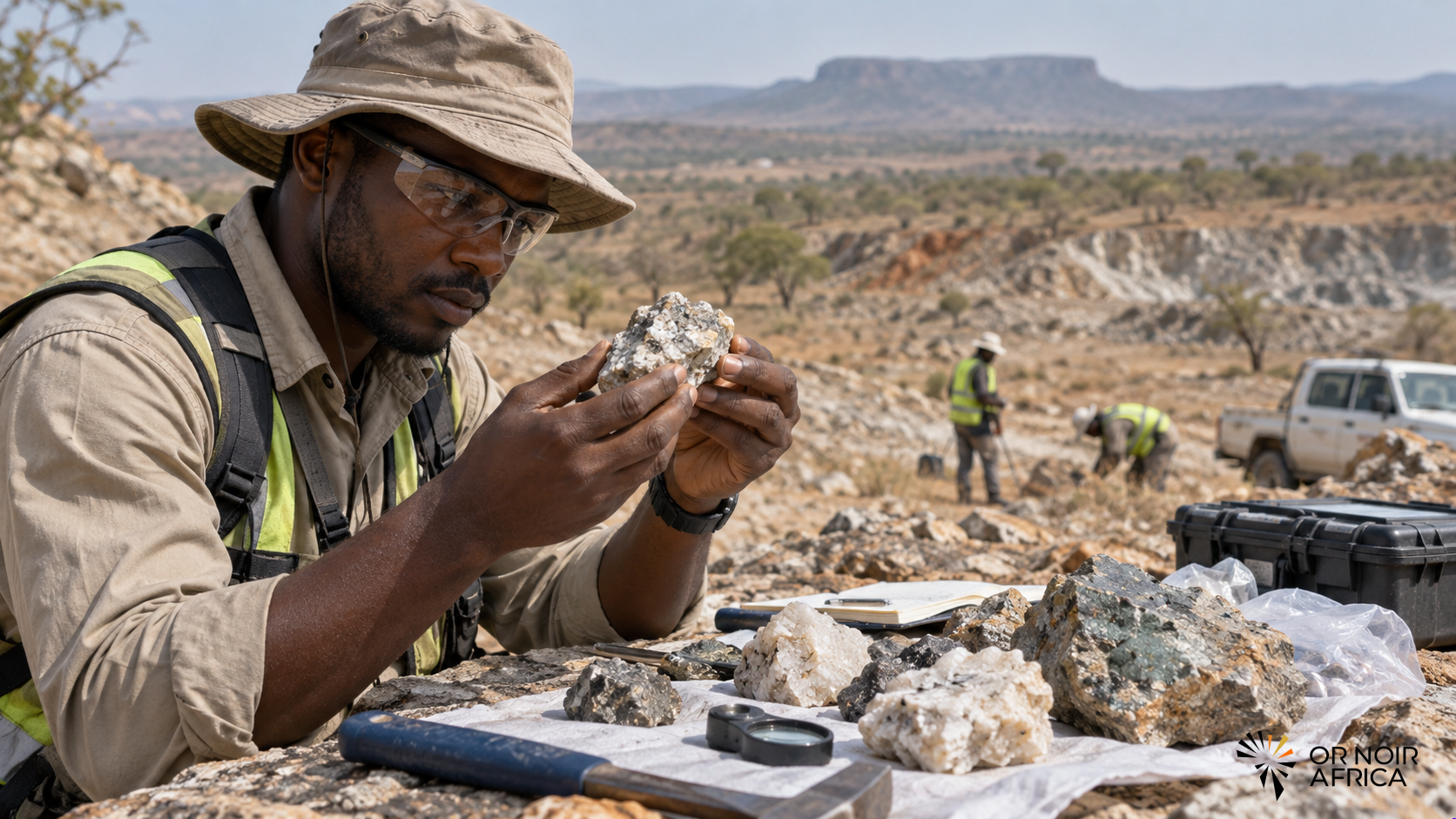
Geology is an initial issue. Better mapping reduces investor risk and helps the state negotiate concessions with more complete information. Data alone, however, do not make a deposit bankable. Resources must be confirmed by drilling, ore characterized, extraction and processing costs estimated, and access to energy, water, roads and ports verified.
Processing is equally decisive. Nigeria seeks to move beyond raw mineral exports to establish local concentration, refining or intermediate manufacturing capacity. This ambition aligns with US interest in supply chains less dependent on a small number of producing countries. It nevertheless raises the question of product destination: will investments primarily supply Nigerian factories, regional markets or US industrial companies?
Security and minerals in a broader relationship
Mining cooperation is developing alongside closer security relations between the two governments. This convergence gives the new agreement political context, as Washington seeks to diversify partnerships and Nigeria wants capital and technology for mining. It does not, however, establish that security cooperation automatically grants resource access or guarantees mining contracts.
Critical mineral chains are sensitive to political risks, facility security, institutional quality and continuity in trade rules. Stability in exploration areas, infrastructure protection and combating illegal networks are investment conditions. But a policy tying mining concessions too closely to geopolitical arrangements could also generate domestic tensions or a perception of lost national control.
For Abuja, the challenge is maintaining a strategy open to multiple partners while setting national priorities. US companies can bring financing, expertise and markets; investors from other regions already play a role in extraction and infrastructure. Transparent competition between offers, governed by economic, social and environmental criteria, would strengthen the country’s negotiating power.
Success will be judged domestically
The state’s ability to oversee licenses, payments, data and local-content commitments will determine the benefits. Published contracts, clear tax obligations and supply-chain due-diligence standards can attract investors while protecting public interests. Training and Nigerian business participation must be integrated into project design, rather than treated as secondary objectives after financing is secured.
Mining development also requires infrastructure policy. An isolated mine can export ore without strongly stimulating the wider economy. Roads, power grids, logistics services and shared facilities could serve several sectors, but their cost must be shared transparently among the state, companies and financial partners.
Finally, the announced $700 billion potential will not automatically become revenue. Public receipts will depend on the pace of production starts, prices, taxation and the share of local processing. The US-Nigerian agreement is a political signal and a basis for cooperation. Its real value will be measured when identified projects obtain permits, secure financing, build infrastructure and demonstrate lasting jobs, skills and revenue for Nigeria.
Have any thoughts?
Share your reaction or leave a quick response — we’d love to hear what you think!
-
 0
-
0
-
0
-
0
-
0
-
0





