

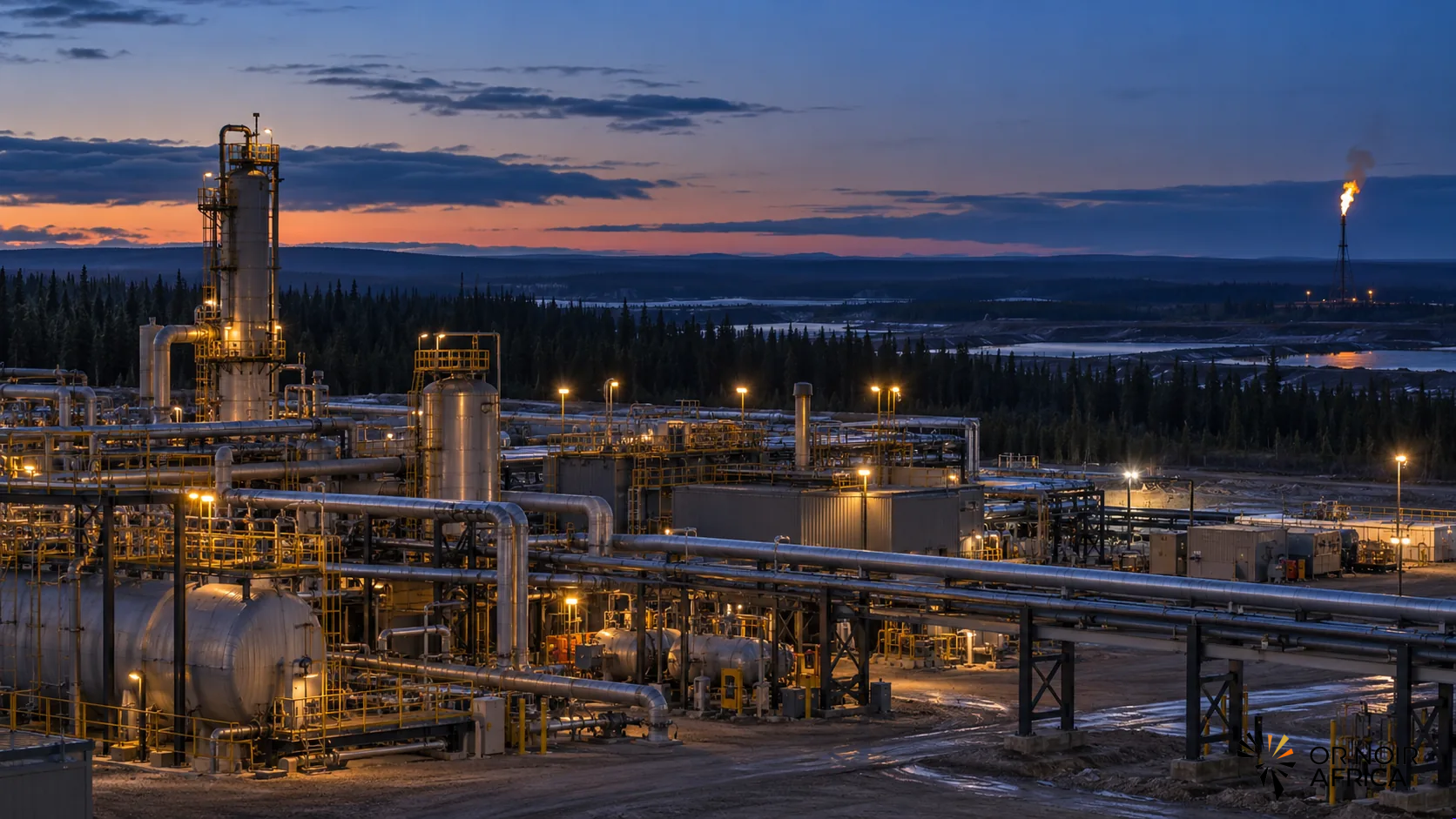
Canada’s oil and gas sector emitted slightly less greenhouse gas in 2025 even as crude oil production reached a record level. The difference remains small: the Canadian Climate Institute’s preliminary estimate puts the decline in sector emissions at approximately 0.2% compared with 2024, while Statistics Canada reports a 4% increase in crude oil production. This signals efficiency gains, but is insufficient to sustainably reduce the climate footprint of an expanding industry.
The result must be interpreted cautiously. It is a preliminary emissions estimate, not the final national inventory to be published later. Other analyses reach a slightly different conclusion: RBC’s Climate Action Institute estimates that sector emissions increased by approximately 1% in 2025, notably with the start-up of LNG Canada’s first phase. The two studies use different methods and scopes. Their divergence is a reminder that one annual figure cannot summarize the trajectory of such a large sector.
Production rises while emissions intensity improves
Canadian hydrocarbon production has been rising for several years, supported particularly by Alberta’s oil sands, improved transport infrastructure and access to new markets. In 2025, crude oil volumes reached a new peak, according to Statistics Canada data. Meanwhile, operators reduced some emissions from extraction and processing, particularly methane vented into the atmosphere.
Two indicators must be distinguished. Carbon intensity measures emissions per unit produced: it can decline as processes become more efficient even if total emissions remain stable or increase. Absolute emissions measure the total amount of greenhouse gases released. For the climate, reducing that quantity remains decisive.
This distinction explains how a sector can produce more without increasing emissions in the same proportion. Reduced leaks, associated gas recovery, less flaring, electrification of some equipment and energy optimization improve the per-barrel balance. However, these gains can be absorbed by activity growth, new projects and the commissioning of energy-intensive infrastructure.
Methane: an opportunity for progress and a concern
Initial Canadian estimates attribute part of recent performance to lower methane emissions. This gas, which escapes particularly during hydrocarbon production, transport and storage, strongly traps heat over the short term. Leak detection and recovery of vented gas can therefore yield rapid climate benefits while limiting resource losses.
RBC’s analysis estimates that emissions from vented gas fell by approximately 21% over two years in the main producing regions studied. This progress nevertheless does not settle the debate about the overall trajectory. RBC also estimates that the Trans Mountain expansion and LNG Canada’s start-up increased sector emissions by approximately 1% in 2025. These projects enable more hydrocarbons to be transported and exported, but also entail additional energy consumption and emissions.
Data quality is therefore central. Preliminary estimates use information available before the official inventory and may be revised. Accounting scopes also differ: some assessments focus on operational emissions from extraction, while others include more midstream activities. Emissions from oil and gas combustion by end users are another category altogether. They should not be confused with emissions generated by production in Canada.
A marginal decline against climate targets
Nationwide, total emissions increased by approximately 1% in 2025 to nearly 691 million tonnes of CO₂ equivalent, according to the Canadian Climate Institute’s estimate. The increase is mainly attributed to greater natural gas use in buildings and electricity generation. Oil and gas remains Canada’s largest emitting sector, and its near-stagnation does not offset growth elsewhere.
The country aims to reduce emissions by 40% to 45% from 2005 levels by 2030, then achieve net zero in 2050. The estimated 0.2% sector decline in 2025 is minimal relative to these goals. It indicates that technical improvement is possible, but not yet that production and emissions follow a trajectory compatible with national commitments.
For policymakers, the challenge is to maintain predictable rules encouraging methane reduction investment while measuring actual emissions from new projects. For businesses, credibility will depend on comparable, verifiable data covering all facilities. For investors and buyers, lower intensity does not replace transparency on total volumes, leaks and infrastructure-related emissions.
The next data series will be the test
The announced decline deserves to be seen as an encouraging but still fragile signal. It will be confirmed or disproved by final inventories and updated production series. Comparisons between the Canadian Climate Institute’s estimates, RBC’s calculations and government data must also be monitored to understand methodological differences.
The question is therefore not simply whether Canada can produce more with fewer emissions per barrel. The 2025 data suggest that this improvement is underway. The true indicator of transition will be the ability to reduce absolute emissions as the industry adapts its assets, infrastructure and markets. As long as production rises and total sector emissions do not decline substantially, the gains will remain limited.
Have any thoughts?
Share your reaction or leave a quick response — we’d love to hear what you think!
-
 0
-
0
-
0
-
0
-
0
-
0